My father first came to the U.S. in 1920 as a ten year old. He was a Canadian, but his parents were refugees from Czarist Russia. His mother could not stand the constant sniping by her sister in law, and took the kids back to Canada in 1922. My grandfather remained and constantly pleaded with her to return. In 1925 she had had enough of the poverty in Canada and caring for seven children. She sought to return, but was prevented by the new Immigration Law that severely limited persons who were born in Russia.
My father graduated from high school in Estevan. He was a very high achiever. He sought to further his education in Pittsburgh, and was given a student visa. Shortly after he arrived in 1929, the Great Depression started. He could not afford the University of Pittsburgh and sought work. He could have stayed, probably undetected, but he could not go further than the menial jobs he could take as an illegal alien. He admitted his indiscretion of fasely using his status as a student and was asked to leave the country.
A year later he was given entry and returned as a legal immigrant. Obtaining jobs, getting fired, about seven times, he finally landed one as a clerk in a department store. During this time he applied for and received permanent residence and eventually in 1935, full citizenship.
His ambition never failed and he became a radio announcer for the Pittsburgh Steelers and the Pittsburgh Hornets (the AHL hockey team that yielded its franchise to the Penguins).
My reason for writing this blog is to illustrate that our immigration policy can and does stifle the new blood that the U.S. needs to progress and maintain its status as a world leader. My father was fortunate, and by proxy, so was I. (To learn more about my father, Joe Tucker, check out Screamer: the Forgotten Voice of the Pittsburgh Steelers.)
The Senate had a majority in favor of considering the Dream Act that would have given foreign born individuals, those who served in the military and those looking for higher education, the opportunity my father had, and he had it in the deepest part of the Great Depression. Unfortunately, Senators, mainly from the South, the Southern colony of Arizona, the Mormon states of Utah and Idaho, and Montana (afraid of an influx of Canadians??) stood in the way of their dream.
Showing posts with label illegal immigrants. Show all posts
Showing posts with label illegal immigrants. Show all posts
Saturday, December 18, 2010


Friday, November 12, 2010
Beyond borders: Arizona and Mexico
I (Murray) am a history buff. I subscribe to the philosophy that only fools are bound to repeat it. Arizona has a special place in American history. At first it was part of New Mexico. To establish a commercial base (i.e., slavery), southerners moved in to the area now known as Arizona during the mid 19th century and unilaterally called it a separate territory. The federal government ultimately recognized the area by drawing a straight north/south border between what is now Arizona and New Mexico.
The two states do, in fact, differ substantially in the make up of population and politics. New Mexico has a substantial Hispanic population who are descendants of people who were Mexican before the Mexican American War. By contrast, Arizona was settled by easterners, primarily from the south.
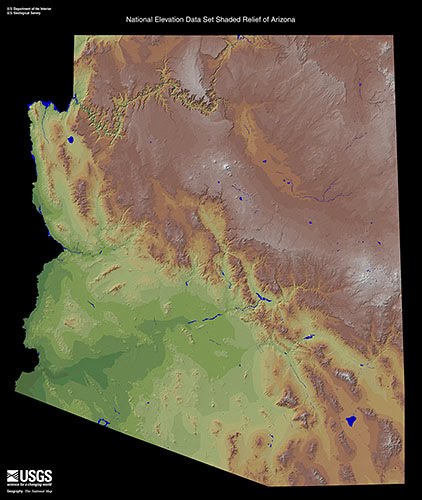
Looking at a relief map of Arizona, there is a mountainous area in the north that falls off to flat land. The south end of the mountainous area was the original border between Mexico and what was then the Territory of New Mexico. The land to the north was ceded to the United States after the Mexican War and contains the present day city of Phoenix. Native American tribes, Commanches and Apaches, were the primary residents, and Mexico was glad to put the defense of Mexicans who were constantly raided by the tribes onto the U.S.
Some southern leaders were concerned that northern interests controlled commerce into California and were making it a free state. A small, but powerful group of them, saw the potential of increasing their influence (particularly slavery) in southern California, and splitting the state in two, one slave, one free. In order to accomplish their goal, they sought to build a railroad from an eastern terminus in El Paso to California. The only problem was the mountainous terrain that they would have to traverse.
Mexico's President, Santa Ana, was in dire financial straits. He was concerned that the U.S. was considering another invasion and needed funds for the Army. A deal was struck to cede the flat area seen on the relief map above to the U.S. This area also includes a small strip of land in the present state of New Mexico. The large area in the relief map that is centered by the present city of Tucson, is know as the "Gadsden Purchase," named for the principal proponent of the southern link to the west coast.
This area was sparsely populated by Mexican farmers scratching a living on what is mostly desert. The current border was fixed as a line in the sand leaving relatives on both sides of the artificial border.
During seventy years after the Gadsden Purchase, it was commonplace for Mexicans to cross the border to visit relatives and to work in the U.S. Many stayed and became citizens.
We lived south of Tucson in the center of the Gadsden Purchase for two years (2004-2005) and visited Nogales, Mexico, on a regular basis. In 2004, crossing the border was easy for anyone. Then the drug gang troubles hit on the Mexican side and the streets of Nogales became deserted of tourists, businesses failed and crossing the border required scrutinized documentation for everyone.
The existence of illegal immigrants in Arizona, particularly Phoenix, has gone unrequited for many years. The illegals provided cheap labor and business and the citizenry looked the other way taking advantage of this near slave labor.
The recent growth in drug trafficking led a majority of Arizonians to accept a stark law enabling local police to carry out federal law that may be in conflict with the U.S. Constitution. It is an outgrowth of the inability of the U.S. Government to control the border with Mexico AND the inability of law enforcement in Arizona to control the traffickers. The issue is NOT illegal immigrants that has existed since the first immigration acts were passed in the early 20th century made entry to the U.S. illegal.
From my perspective, it is the geography of Arizona today represented only by an arbitrary line in the sand instead of the original natural mountainous border of 1845, the strained historic relationship of the U.S. with Mexico, and the racial attitudes of early settlers that are the foundation of the problem.
Subscribe to:
Posts (Atom)