Depressions. There are people today, mostly in their nineties, who experienced the last one that commenced in 1929 and ultimately ended because of huge government expenses and deficits to fight the second world war. There is no one alive today who can remember the other one that was also precipitated by a monetary crisis in the mid 1890's. While the cause for both can be traced to liquidity, the availability of loans, the underlying reasons are different.
In the 1890s the money supply was gold. For fifty years the country had increasing amounts of this commodity from California, Alaskan and Yukon gold mines. The supply of new gold began to dry up in the 90s, but not the need for it to fund expansion.
The capricious spending of the 1920s came to an abrupt end when speculators realized that the value of the stocks they owned was ethereal. The banks that lent money on what they thought was market value, suddenly found that their collateral had no substance. They could not lend and business could not find funds to continue growth.
In 2008 the basis for growth was not gold nor stocks, but the consumer's appetite for big houses funded by what was perceived to be a never-ending increase in value of their investment. Americans began to use their homes as ATMs. Again, the banks went along with this fantasy, fueled by the guru of the Federal Reserve, Alan Greenspan.
Consumers could not afford their mortgages and cut back on spending. Business saw inventories increasing and cut back on both hiring and making additional product. Banks stopped wild loans of 100% or more of value. While the basis was different (houses as collateral versus stocks as collateral) the problem was the same. Loss of liquidity.
In 1935 along came John Maynard Keynes who wrote The General Theory of Employment, Interest and Money. He basically said that there are three components of any economy: What consumers spend, what business invests, and what Government spends (or invests). These three items comprise the Gross Domestic Product (GDP). Reduce any one of them and GDP decreases.
The deficits caused by our participation in World War II brought an end to the Great Depression and convinced some that Keynes was right, that government must step in when the other elements of GDP are not viable.
A moratorium on the Employment Tax (FICA) that funds Social Security is now being considered. In fact, Senator Scott Brown (R. Mass) had indicated his support of this idea in January. This tax goes into a Trust Fund that is then borrowed by the Government to fund deficit spending and may be the largest lender to the General Revenue. Stopping this tax does not add to the general deficit. It is not part of the federal budget.
What does a moratorium do? First, we do not have a problem for funding Social Security until about 2037 under current actuarial calculations. By allowing current employees to use these funds that would otherwise be a tax, consumer spending will increase immediately. Secondly, business who will save their portion of FICA will have funds to both increase investment and incentive to hire additional workers since the cost of wages will be reduced by the elimination of the FICA tax.
The placement of funds in the hands of consumers and business will be the fastest way to improve the GDP. Keynes would be smiling.
Friday, September 3, 2010


Thursday, May 27, 2010
Obama’s Drill Baby Reasons don’t meet the economic test
The President is not an economist. The idea that drilling in U.S. waters will reduce dependency on foreign nations is absurd. Excuse the pun, but oil is fungible. What is brought up in the waters off shore goes into the world market. Now consider the cost, not only of oil drilled a mile beneath the Gulf, but also the indirect cost of leaks and spills in delicate areas. Economic theory states that price is based on marginal cost. The most expensive product that clears the market determines the price for the market as a whole. The lower cost product (Saudi oil) gets a premium since it is cheap to produce. No wonder oil companies want to drill the paltry amounts of off-shore US oil. As this oil comes to market with its high cost, the price paid for less costly production earns a significant premium.
The cost of oil brought up from the near surface wells in the Middle East is by far less costly and less environmentally challenging than that from the Gulf. True, the U.S. MIGHT get some royalty income from the leases if the Interior Department can get its act together to collect this income. But this oil will not make a dent in our use and there is no reason to believe that the oil drilled from offshore will reduce our out of pocket cost-in fact such payments will probably increase since the oil produced off shore is the most costly oil to produce on the market.
A sound energy policy should not have as one of its facets the cost-ineffective off shore drilling that has led to making the Gulf of Mexico an oil tanker, polluted shorelines and sickened inhabitants of Louisiana, many of whom do not have health insurance.
There is a superabundance of finance experts in the Administration. There needs to be a stable of experts on strategic markets, like oil.
The cost of oil brought up from the near surface wells in the Middle East is by far less costly and less environmentally challenging than that from the Gulf. True, the U.S. MIGHT get some royalty income from the leases if the Interior Department can get its act together to collect this income. But this oil will not make a dent in our use and there is no reason to believe that the oil drilled from offshore will reduce our out of pocket cost-in fact such payments will probably increase since the oil produced off shore is the most costly oil to produce on the market.
A sound energy policy should not have as one of its facets the cost-ineffective off shore drilling that has led to making the Gulf of Mexico an oil tanker, polluted shorelines and sickened inhabitants of Louisiana, many of whom do not have health insurance.
There is a superabundance of finance experts in the Administration. There needs to be a stable of experts on strategic markets, like oil.
Sunday, April 4, 2010
Retraining the Lost Generation
Our elected officials are enamored with spending funds we don’t have on “Defense,” like wars that have no significance for our homeland- Vietnam and Iraq. We do have a war we should be fighting, but we appear ignorant of it. All indications are we are losing this war, the training of a workforce that is competitive in this world economy.
Unemployment, today, can be traced to the construction industry. The overbuilding of the period from 2001-2007, spurred on by ridiculous lending by banks and mortgage companies, made available well-paying jobs for people who did not need education. Construction jobs stimulated jobs in ancillary industries for wood products and structural steel, to mention two.
I am old enough to remember to have worked on a similar structural economic problem that became acute in the early 1960’s. We had emerged from World War II and the Korean War. The defense industries that had thrived in this period were seeking government largesse that President Eisenhower warned against: the military-industrial complex. But the steel industry and its major ancillary industry coal mining were in increasingly desperate shape.
The Appalachian Regional Commission was created to seek solutions to the horrific poverty that we were seeing in states like West Virginia and eastern Kentucky. Leaders of cities like Pittsburgh saw its future in industries other than steel. The Congress was persuaded to invest in education through the National Defense Education Act.
Today, we do not have such leaders as the progressive, David Lawrence, and the ultra conservative, Richard Mellon, who combined to shift from the pollution of steel to transform Pittsburgh to where you can now see that the sky is really blue. We do not have the sharp political wits that made the Kennedy-Johnson period a political success story.
If it takes using the Defense budget, perhaps that is where our emphasis should be. We have a war in the U.S., but it is not in Iraq, Iran, Israel, but at home. We are growing an increasingly uneducated work force at just a time when just the reverse is needed.
Let’s shift our defense spending from planes, tanks and guns to educating our future generations and retraining the lost generation.
Unemployment, today, can be traced to the construction industry. The overbuilding of the period from 2001-2007, spurred on by ridiculous lending by banks and mortgage companies, made available well-paying jobs for people who did not need education. Construction jobs stimulated jobs in ancillary industries for wood products and structural steel, to mention two.
I am old enough to remember to have worked on a similar structural economic problem that became acute in the early 1960’s. We had emerged from World War II and the Korean War. The defense industries that had thrived in this period were seeking government largesse that President Eisenhower warned against: the military-industrial complex. But the steel industry and its major ancillary industry coal mining were in increasingly desperate shape.
The Appalachian Regional Commission was created to seek solutions to the horrific poverty that we were seeing in states like West Virginia and eastern Kentucky. Leaders of cities like Pittsburgh saw its future in industries other than steel. The Congress was persuaded to invest in education through the National Defense Education Act.
Today, we do not have such leaders as the progressive, David Lawrence, and the ultra conservative, Richard Mellon, who combined to shift from the pollution of steel to transform Pittsburgh to where you can now see that the sky is really blue. We do not have the sharp political wits that made the Kennedy-Johnson period a political success story.
If it takes using the Defense budget, perhaps that is where our emphasis should be. We have a war in the U.S., but it is not in Iraq, Iran, Israel, but at home. We are growing an increasingly uneducated work force at just a time when just the reverse is needed.
Let’s shift our defense spending from planes, tanks and guns to educating our future generations and retraining the lost generation.
Saturday, March 20, 2010
From Directing to being Directed
For over thirty years I directed The Avodah Dance Ensemble. I loved creating pieces, working with talented dancers and musicians. When I retired in 2004 it was with a satisfaction of having said what I needed to say. I was also thrilled to have Julie Gayer Kris become the new artistic director and to know that what I had begun was going to continue with new energy and ideas.
I turned by attention to painting. The discipline from dance days carried over in that I found that I could easily spend hours at the easel creating. After a few years I sensed something was missing. Some volunteer work and even a part time job didn't feel the gap I sensed. Then last year when we were in Placitas, NM I saw an ad for an evening acting workshop and went. I loved it. When we moved here last September I decided that doing background (extra) work on TV and film might be right on. I was lucky to get some work on Crash which I wrote about earlier. As we settled into Santa Fe, I got more serious.
I signed up for a class in Acting for Film and Media at Santa Fe Community College. The 8 week (twice a week) course just finished, and I loved it. Developing two pieces, one a monologue and the other a two person scene was challenging. Most of all I loved the time in front of the camera where fellow students directed our pieces.
This past week I had the opportunity to do background work on two projects. One was a student short independent film and the other was a major Hollywood feature. Again I found I loved the experiences. I liked being told when to enter, what to do and simply be part of the creative process without having to be the bottom line director that I had been with the dance company. Since I signed a confidentiality agreement related to the feature film I will have to wait until it is released to share any specific thoughts. It was an amazing learning experience and I will be going back on set Monday this time with our 1993 mini van.
There seem to be lots of opportunities in New Mexico for background work. I am meeting people on the sets that have been in 20 or more films. And people that are new to it. My partner in a cross for the feature was a physician that had just retired and, like me, this was his first film. So besides the opportunities for work (yes we are paid on TV and film projects although not on student projects) interesting people gravitate to this type of work.
When our instructor asked us if we wanted to continue to the second half of the class he went around asking if we wanted to focusing on acting or directing. I didn't hesitate. Acting!
Not only had I liked the process of being directed I found I wasn't embarrassed by seeing myself on a large scene when we watched our scenes this week. Maybe I have just accepted myself as I am. I could watch myself and see what was working and what I needed to work on. I appreciated the feedback from the instructor as to what he recommended.
I look forward to continuing this new journey and have found the balance to the quiet work of painting alone in my studio.
I welcome your reactions and comments and sharing how you have found balance in your life.
Tuesday, March 9, 2010
Bill Dudley: The End to a one year era
Author's note: The following was among my father's notes from which I wrote the book Screamer: The Forgotten Voice of the Pittsburgh Steelers. The incident occurred in 1947, and now all have passed on. My dad viewed Dudley as the greatest individual to ever play pro football, and one glance at his achievements in running, passing, kicking and playing defense should convince anyone else of why dad was justified.
I returned on Sunday from the Run for the Roses. I wanted to write this note as quickly as possible so that I would not forget. Art pledged me to complete secrecy about what I had heard, and other than writing and filing this note; I will not speak of what transpired.
Besides me, there were three others at the Derby Saturday, Art Rooney, Bill Dudley, and Fran Fogarty. “Bullet Bill” had finished the 1946 season as the most spectacular player I or anyone else had ever seen. Art wanted to sign him for the ’47 season, but there were problems. He had had several clashes with that other Steelers great, the coach, ‘Jock’ Sutherland. Bill had been a standout at Virginia where they played the new T-formation. In the single wing, Bill was often left open to punishing tackles. He wanted the coach to modify and got into a heated argument with him over tactics.
Having finished the season under the unwavering coach, Dudley came to Louisville with one mission. If he were going to continue with the Steelers, he would have to be paid a lot more than the $5,000 he made for 1946. He told Art that he understood that “Whizzer” White had a contract for $15,000 a decade earlier, and that either he would get $25,000 or he would retire.
Art told Bill that he had been carrying the team for the war years and it was only in 1946 that the team began to almost pay for itself. Bill was noticeably upset, but knew that Art was being truthful. He told him that the maximum he could go was $10,000, but would agree to a bonus if certain conditions were met. The possibility of anything approaching Bill’s figure was not remotely possible.
Bill was downcast when we parted, he back to Virginia, we, back to Pittsburgh.
I returned on Sunday from the Run for the Roses. I wanted to write this note as quickly as possible so that I would not forget. Art pledged me to complete secrecy about what I had heard, and other than writing and filing this note; I will not speak of what transpired.
Besides me, there were three others at the Derby Saturday, Art Rooney, Bill Dudley, and Fran Fogarty. “Bullet Bill” had finished the 1946 season as the most spectacular player I or anyone else had ever seen. Art wanted to sign him for the ’47 season, but there were problems. He had had several clashes with that other Steelers great, the coach, ‘Jock’ Sutherland. Bill had been a standout at Virginia where they played the new T-formation. In the single wing, Bill was often left open to punishing tackles. He wanted the coach to modify and got into a heated argument with him over tactics.
Having finished the season under the unwavering coach, Dudley came to Louisville with one mission. If he were going to continue with the Steelers, he would have to be paid a lot more than the $5,000 he made for 1946. He told Art that he understood that “Whizzer” White had a contract for $15,000 a decade earlier, and that either he would get $25,000 or he would retire.
Art told Bill that he had been carrying the team for the war years and it was only in 1946 that the team began to almost pay for itself. Bill was noticeably upset, but knew that Art was being truthful. He told him that the maximum he could go was $10,000, but would agree to a bonus if certain conditions were met. The possibility of anything approaching Bill’s figure was not remotely possible.
Bill was downcast when we parted, he back to Virginia, we, back to Pittsburgh.
Sunday, February 28, 2010
Health Care: Think Comprehensive and Practice Incremental Change
When I worked in policy development from 1968-70 one thing became totally apparent to me: It is nearly impossible for Congress to pass comprehensive policy.
When I worked in policy development, comprehensive took the form of PPBS or Program Planning Budgeting Systems. This concept evolved from the attempts by the Defense Department to get its budget to where results related to dollars spent. The problem, it required the Representative in Congress to gore the hides of a majority of its members.
The same is true for the bills passed by the Senate and House on Health Insurance Reform. No one questions the need for reform, but almost each step proposed in each of these comprehensive packages has an impact on individual representatives that necessitates him or her to register a no vote, or worse, get “paid off.”
As of the first of March 2010, passing a comprehensive change has been placed in the hands of Nancy Pelosi, Speaker of the House. If she could garner a majority, the very imperfect Senate package could be passed and sent to the President. An astute politician, she has decided the easy way out is to throw the ball back to the poorly operating Senate and let them muddle through. History has shown that this maneuver may be clever politics, but cowardly and likely to lead to no change for a health care system that is on its way to total disaster.
Comprehensive proposals rarely pass Congress. FDR barely did it with the Social Security Act in 1935 and LBJ squeaked by on the Civil Rights Act of 1964. Comprehensive reform of the Defense Department budget sought by Robert McNamara was DOA as it cut programs in too many Congressional Districts, programs that if considered separately would have won majorities in most aspects.
Republicans have been crude and gamey in their political attacks. But, underlying their arrogance is a political reality, expressed most effectively by Senator Alexander. The comprehensive nature of the House and Senate proposals cannot receive clear majorities. Their supercilious proposal of “shred and start over” is reflective of the political reality that the substance in each proposal can have an up or down vote that might lead to comprehensive change: to paraphrase Senator Alexander, incrementalism will garner bipartisan support for most of the pillars in each proposal, that the political fight will be over a small percentage of items that may pass or fail by narrow votes.
The late Senator Kennedy understood this political reality and worked diligently on structuring incremental change. He also publicly scolded himself for not working with the Nixon Administration when it proposed a comprehensive health care program in 1974 when the percentage of GNP spent on health care was only 8% (now 17% and growing). I would like to think that the Congressional leadership would have learned this lesson from history. It’s all right to think comprehensively on health care reform, but realism dictates that enactment will occur only through passing elements incrementally.
See my other writing on health care reform: Universal Health Revisited 1/27/09; Doctor Appointment: Wait 3 Months; Murray's latest writing on health care; and Nixon Health Plan Revisited.
Tuesday, January 12, 2010
Finding My Voice as an Artist

When we were preparing for our move to Santa Fe, Murray decided to transfer his large collection of LP records to computer files and to give away his record collection. I decided to take 25 of his records to experiment with an art project. So far I have completed 3 pieces and am nearly done with the 4th. I have decided not to evaluate what I am doing until I have done 12 of the 25. To keep experimenting and refining my process.
Here's my process:
I listen to a record and select a two to three minute portion. (Murray provides me with the file from his computer). I listen to it over and over like I might if I were going to choreograph it.
Then, using pastels, I make at least four rough abstract sketches. I let the music tell me what colors to choose. Much like improvising movement, I play with lines and shapes on paper with no censoring.
I look at the different sketches that I have done and choose one to refine and do so still working in pastel. When I am satisfied with that I move to canvas.
I have already taken a record and glued it to a 12 by 12 inch canvas. The record is gessoed so it will take oil paint. I do two coats and let it dry.
Now I'm ready to take the pastel sketch and sketch its outline in charcoal to the record/canvas.
Next I follow the traditional techniques I learned in Tony Ryder's class of inking in the sketch, doing an underpainting and then a final painting (or form painting) in oil. This process can take several weeks... especially since I am painting the sides of the canvas and that can involve several days of drying before I can turn the canvas to work on a side. I like painting the 1 1/2 inch sides because it gives it a 3 dimensional look and doesn't require framing to have a finished look.
Here's an example of the 3rd study I did to a short section of Vivaldi's Concerto in G Minor.

I would be interested in hearing from other visual artists who are experimenting with ways to find their own voice!
Friday, December 11, 2009
Same Old Steelers
 From Left: Chuck Noll, Joe Tucker, Art Rooney (1975)
As he passed my father after suffering another humiliating defeat, Art Rooney, founder and then President of the Pittsburgh Steelers, would utter a phrase I heard all too often, but seems applicable today. Dad would say something like, "Well Prez, we had a chance." To which Art would respond, "SOS." Art never seemed to be upset with the team he founded and nurtured through years of deficits with no thought of moving the franchise as so many other owners had done: Cardinals from Chicago to St. Louis, to finally repose in Arizona; Rams from Cleveland to LA to St Louis, Redskins from Boston to Washington, Colts from Dallas to Baltimore to Indianapolis.
I'm sorry, but on Thursday December 10th, I completely forgot about a game with the Browns because I knew the outcome. Instead, I chose to watch the Penguins, a team with which I had no history having moved from Pittsburgh in 1966. I saw the poor passing of "star" forward Malkin who has started more than one scoring rush for the opposition and thought of Recklessburger's game losing interceptions into the end zone. I swore. I don't know how Dad kept his cool when Pete Backer would wind up for a slap shot on the power play only to have it blocked and the opponent on his way to a break away on Gil Mayer.
Steelers History month is on at the Heinz-Pittsburgh History Museum on Smallman Street. I wish I could attend, but, alas, I like the Sun in Santa Fe, and the comforts of home and a 50 inch flat screen, HD TV as I sink into my couch.
You can get my book, Screamer:The Forgotten Voice of the Pittsburgh Steelers at the Museum Bookstore, or order it through my web site: www.murraytuckerwriter.com
Sunday, December 6, 2009
Hoop Dreams


One of the advantages of Santa Fe is that large snowfalls are rare. At one of the large garden centers here we saw a demonstration of a 4'x8' garden in which various vegetables can survive even though the temperature goes to zero or below.
The base of the "box" is constructed of cedar. The steel hoops have a summer cover and a winter cover that keeps in heat. A soaking hose is run along the ground and one 100 watt light is mounted in an inverted pot to maintain temperature when the outside temperature drops below 38F.
We wanted to see it work for two reasons, curiosity and to have certain vegetables virtually year round.
The system has worked except for the soaker hose. We had to hand soak the ground and may have to do this again in a week.
As part of the "Green Movement" we expect to see many of our neighbors with such a convenience in the next couple of years.
Planted now: spinach. Kale. broccoli, chard, onions, lettuce (various)
Tuesday, November 10, 2009
NFL on CBS TV
While technically correct that 2009 is the 50th anniversary of a contract between the NFL and CBS TV, CBS had contracts with a few teams for broadcasting away games for several years.
[for other posts on Steelers see http://sportbehindthemike.blogspot.com/
My father, Joe Tucker, was a pioneer in broadcasting both radio and television of Pittsburgh Steelers' games. His initial telecast in 1951 was carried by DuMont from Comiskey Park in Chicago (Steelers vs. Chicago Cardinals). His work for CBS TV began in 1954. His last report was in 1981 as a guest on a radio broadcast.
[Video of last broadcast]
Reading through his notes in preparation for writing his biography (Screamer: The Forgotten Voice of the Pittsburgh Steelers) I was surprised that he stuck with television. While there was more money and prestige in the visual media, the changes in broadcasting style, forced by production people who had no experience in football, brought down the quality of what a listener would get from an announcer. Cardinal Rule 1 with Joe was to provide an oral picture of everything that was happening on the field. This rule conflicted with Cardinal Rule 1 of the production people: Describe what the viewer was seeing on his TV set. What this conflict meant was that description of what flankers were doing on offense and linebackers were doing on defense, was not provided.
On a punt, the camera's focus was first on the punter and then on the receiver. Clips (now known as blocks in the back) were called by referees. The fan had no notion of the alleged crime other than it was called. The announcer was told not to relate his own view either of the fact or the severity; there was no replay.
As CBS moved towards a League contract, the number and force of production people increased. Perhaps the most disconcerting was the institution in 1958 of "time out for a commercial." CBS producers wrote specific guidelines instructing officials when to interrupt the flow of the game. While such interruption was to be as neutral as possible, timing was left to sideline officials who (at that time) were hired by the home team.
Television coverage has evolved to the state of art it is today, but the early days were chaotic and conflicted for announcing. If you're like me, you ignore the announcers who are often in another world and either turn off the sound or pay it no mind. You time chores of 4 minutes so that they occur with commercial interruptions that last at least four minutes. Games that used to last 2.5 hours now stretch beyond three hours, but the game has become genuinely entertaining, especially in high definition on a big screen.
[for other posts on Steelers see http://sportbehindthemike.blogspot.com/
My father, Joe Tucker, was a pioneer in broadcasting both radio and television of Pittsburgh Steelers' games. His initial telecast in 1951 was carried by DuMont from Comiskey Park in Chicago (Steelers vs. Chicago Cardinals). His work for CBS TV began in 1954. His last report was in 1981 as a guest on a radio broadcast.
[Video of last broadcast]
Reading through his notes in preparation for writing his biography (Screamer: The Forgotten Voice of the Pittsburgh Steelers) I was surprised that he stuck with television. While there was more money and prestige in the visual media, the changes in broadcasting style, forced by production people who had no experience in football, brought down the quality of what a listener would get from an announcer. Cardinal Rule 1 with Joe was to provide an oral picture of everything that was happening on the field. This rule conflicted with Cardinal Rule 1 of the production people: Describe what the viewer was seeing on his TV set. What this conflict meant was that description of what flankers were doing on offense and linebackers were doing on defense, was not provided.
On a punt, the camera's focus was first on the punter and then on the receiver. Clips (now known as blocks in the back) were called by referees. The fan had no notion of the alleged crime other than it was called. The announcer was told not to relate his own view either of the fact or the severity; there was no replay.
As CBS moved towards a League contract, the number and force of production people increased. Perhaps the most disconcerting was the institution in 1958 of "time out for a commercial." CBS producers wrote specific guidelines instructing officials when to interrupt the flow of the game. While such interruption was to be as neutral as possible, timing was left to sideline officials who (at that time) were hired by the home team.
Television coverage has evolved to the state of art it is today, but the early days were chaotic and conflicted for announcing. If you're like me, you ignore the announcers who are often in another world and either turn off the sound or pay it no mind. You time chores of 4 minutes so that they occur with commercial interruptions that last at least four minutes. Games that used to last 2.5 hours now stretch beyond three hours, but the game has become genuinely entertaining, especially in high definition on a big screen.
Thursday, November 5, 2009
SOCIAL SECURITY:NO INCREASE


Do it yourself Sanitary Engineer, JoAnne (she studied for five minutes at the Transfer Station to get her Ph.D. pile it higher and deeper).
Loading the transfer mobile (aka garbage truck) took five minutes- Murray watched.
Actually, where we live it is easier to drive our 'refuse' than to move a garbage can down our drive and up to a cul de sac. It's also way cheaper and we get to recycle.
We run refuse once every two to three weeks. Each trip costs $1.35 plus gas with no wear on Murray's body- he loves taking pictures, and JoAnne sees the trip as part of her stay healthy- keep the earth for the future routine.
Friday, October 9, 2009
Modeling for Art Students
Now that I am settled in our home in Santa Fe it is time to get back to painting and drawing. On Tuesday and Thursday Evenings current students and alumni of the Tony Ryder Studio, meet to draw. Because the cost of a model is beyond the budget of most, each participant signs up for one week of modeling. The rest of the time one gets to draw.
Last night, I went for the first time. The assigned model didn’t show. We waited fifteen minutes. Knowing that I had never modeled before and that I would be signing up to model for two sessions later on, I decided that I wanted to give it a try for a shortened session to see if I could handle it. I volunteered and immediately the five other artists began setting up. I climbed into the chair set up in the dramatically lit section of the studio and found a comfortable pose. As it was most likely that people would be doing just a portrait my big question was hair up in an informal bun or down. I decided “up.”
A fellow participant began the timer. I choose a spot to focus on knowing that would help keep my head at the same angle and began using meditation techniques of counting my breathing to help pass the time. As always at The Ryder School an intense quiet fills the room as artists focus on their work. It was an amazing feeling to be their model and know that sitting very still and focused was enabling them to create.
I thought I might have felt self-conscious, or that my ego would get in the way. Neither happened. Instead I simply felt a part of the creative process. After 20 minutes of sitting there is five minutes of break. During the break I could look at the progress being made by fellow artists. Each protratit was from a different angle. Each clearly captured my likeness and each had a quality unique to the artist. One of my favorites emphasized my eyes. The dramatic lighting gave a sculptured effect that I enjoyed seeing.
Wednesday, September 23, 2009
Background Work on "Crash"
As we were planning to relocate to Santa Fe, I thought what fun it would be to do extra work. There are three television series that film in Albuquerque (about an hour drive from Santa Fe). A number of films are also done each year. Occasionally over the summer I would google New Mexico casting and visit a website that posts casting calls. Now that we are New Mexico residents, I decided it was time to follow through on my research. Moving can be very stressful and I was definitely feeling the tension of camping out in our house until furniture arrives and other craziness going on with the house. To divert my mind, on Tuesday morning I sent my headshot and resume to "Crash" casting for extras.
My early research showed that they would be in production until around October 9th. The notice I was responding to had been posted back in August and I really had no expectations. You can imagine my surprise when I got a call around 5 PM Tuesday to see if I was available for work the next day. I gulped and said yes and then was told I needed to bring three "upper middle class" looking outfits. Well we have very few clothes here... just one suitcase each. Somehow I figured out two outfits and then visited Walmart and picked up a purple jacket that could give a different look as well as some shoes in case the "Keen" casual shoes that I live in won't work.
Then I waited. I thought someone would call with directions. At 8AM I was called asked "Where are you? You're supposed to be here at 8:48 AM. I live in Santa Fe, but the call was for a place in downtown Albuquerque. I had my bag packed and dashed out of the house at 8:10. Speeding is not a character trait. If anything I am more likely to be rear ended by a speeding turtle. But I got there, and ahead of two others who were late.
After signing in, wardrobe looked over my three outfits and selected a first outfit and a second if needed. Luckily the first one they selected was my own and my hope was that I would be able to return the Walmart jacket along with the shoes. Back to our "holding" area to wait for instruction. The Assistant Director in charge of extras then asked if any of the extras had driven because they were short on "upscale" cars. He asked us to raise our hands if we had a car that wasn't red or white. He then asked us each the kind of car we had. I shared that I had driven a 2001 SVU Mitsubishi Montero Sport. Two of us were selected to join the line with a Porsche, a Mercedes, and a BMW. We were led to a parking lot where the action was to take place.
After signing in, wardrobe looked over my three outfits and selected a first outfit and a second if needed. Luckily the first one they selected was my own and my hope was that I would be able to return the Walmart jacket along with the shoes. Back to our "holding" area to wait for instruction. The Assistant Director in charge of extras then asked if any of the extras had driven because they were short on "upscale" cars. He asked us to raise our hands if we had a car that wasn't red or white. He then asked us each the kind of car we had. I shared that I had driven a 2001 SVU Mitsubishi Montero Sport. Two of us were selected to join the line with a Porsche, a Mercedes, and a BMW. We were led to a parking lot where the action was to take place.
I must say that this felt like back in the dance studio only now it was about choreographing the timing of seven cars to get the effect they wanted. It was also great fun to be given instructions rather than be the director as I had been for thirty some years. We were each given a walkie talkie set to a channel for our car director. Each car was assigned a name. I was L2 meaning second car coming from the left. We then rehearsed several times the timing as the police closed down the street for us. Periodically the street would reopen for a few minutes and then close down again. Once they were satisfied with the timing we did about five more run throughs while they filmed one of the lead characters in the show getting into a car from various angles with us providing the background. Once done it was back to the holding area where I put on my selected pedestrian outfit.
A half hour or so later the twelve pedestrian extras were transported in a van to a new site. Two of the shows lead characters were doing a scene sitting in the front seat of their car and we provided the background of a street. The AD looked over our group and assigned us various places in the street. I was placed with another woman to cross as if in conversation. The AD following the script assigned us entrances to create a random impression. Again we rehearsed and then they filmed from many angles.
More walking again across the street and then back to our original places for shooting another angle they wanted. In between takes we had a "holding" space and it was interesting to learn about the other extras. A doctor who wanted to do this just for fun, several who had done quite a bit of extra work, several between jobs, a student, a social worker, and one or two who I hunched were aspiring actors.
It was a wrap at 4 and we were all transported back to the base holding area and invited to have dinner which was an impressive spread. The AD came around and signed our time sheets and thanked us for our work. I was surprised to see that not only did I get my $9 per hour for 8 hours, but that I also received extra money for the use of the car!
As I drove back to Santa Fe I thought how good it felt to be part of a production. Since retiring from directing the Avodah Dance Ensemble I have missed that energy and group collaboration. To have had an opportunity so soon after arriving in Santa Fe was indeed a blessing and a definite stress buster!
Monday, August 31, 2009
Nixon Health Plan Revisited
On Monday, August 31, 2009, Paul Krugman wrote an article on the Nixon Proposal. I have been touting this proposal for years: http://www.steamboatpilot.com/news/2009/jun/10/murray_tucker_phd_buying_reinsurance/
It is a public option that is more progressive than anything that has been put forth, so far. I urge followers of this blog to view it: http://www.nytimes.com/2009/08/31/opinion/31krugman.html?hp
Wednesday, August 19, 2009
Murray's latest writing on health care
Murray has written a Letter to the Editor of the Steamboat Pilot on the Structural Problem in Health Care. Here is a link to the letter.
Sunday, August 2, 2009
Rabbit Ear Pass Steamboat Springs Colorado


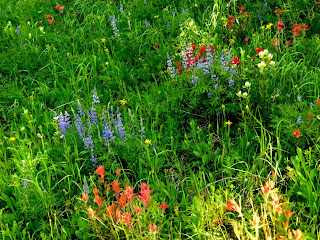
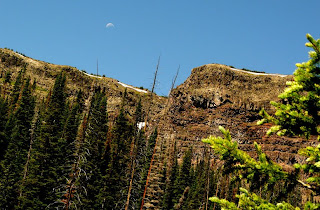
It was unusual for so many wildflowers to be present this late. At the end of June we visited the same area with our grandson, Jonathon. There were NO wildflowers.
Rabbit Ears is easily accessed off of US 40, east of Steamboat Springs. Its name relates to two stone outcroppings on the summit (you can see one of these outcroppings in the picture on the left).
The picture on the right was taken at a picnic area at nearby Lake DuMont. The dominant flowers were Lupine and Indian Paint Brush- but there were many more varieties.
Thursday, July 16, 2009
Hike to Smith Lake in the Flat Tops

Yesterday we headed out for this hike that is in the flat-tops about 30 miles south of Steamboat. In less than five minutes after arriving we had put our back packs and walking sticks down and were busy photographing the amazing display of wild flowers. The Indian paintbrush were spectacular.
A highlight is the creek that flows directly out of the lake. Blue and white wildflowers grace its banks. The lake itself is peaceful and serene and a wonderful place to just sit quietly. We have rarely seen anyone else at the lake and yesterday we saw no one on the trail or at the lake.
Here are a few of our favorite pictures from yesterday. Enjoy as we did!!

Saturday, May 23, 2009
A Visit to Georgia O'Keeffe's House in Abiquiu

Abiquiu Lake
Awesome is the best word I can use to describe our tour to Georgia O'Keeffe's house and studio. The tour is run by Georgia O'Keeffe Museum for which we made reservations by phone 10 days in advance. I understand that sometimes,especially in the summer. there can be a month or more wait. This is not surprising as the tour only runs three days a week from mid March through mid November (Saturday tours are added from June through October) with just five tours per day. Each tour is limited to twelve people at a time. No cameras are permitted
The meeting place is the Abiquiu Inn where the O'Keeffe tour office is located. After checking in we boarded a mini bus for our short five minute ride to the property. Located on a bluff close to the plaza of the small village of Abiquiu I was immediately struck by the beautiful grounds and spectacular view of the Chama River valley.
Our guide was extremely knowledgeable with a strong respect for O'Keeffe. She grew up and lives in Albiquiu as do most of the other people working for the tour group. She remembers seeing Ms. O'Keeffe walking in the village and met her on several occasions.
We began in the garden with an introduction to the general history related to O'Keeffe's purchase of the property. We also learned that she grew her own food and the strong impact of her gardener. The grandson of the original gardener now takes care of the property.
We could not enter all rooms as they have fragile floors so we viewed her main sitting room and dining room through a large window. Later we also viewed her bedroom through large windows.
Our first stop in entering the house was an interior patio made famous by the pictures she painted of the "black door" and of photo's of her in this space. This was indeed a very special spot with an almost sacred feeling. A large fragrant sage brush neatly trimmed dominated the center.
The sense of the outside spilling into the inside by large windows was obvious in the kitchen where,besides a table near a large window,a sofa was also placed so one could sit and enjoy the incredible view.
The living space is 5,000 square feet and O'Keeffe's studio and bedroom are actually a separate building linked by a garden. Again both the studio and bedroom are filled with light from outside. The studio is quite large and contains two of her paintings. One of the paintings was inspired by an airplane ride observing the floor of clouds below and the second by her view of the Washington monument. A small original sculpture was featured on a small table.
Her bedroom featured two sides of windows giving her wonderful views of the valley below and the hills in the near distance.
Our guide highlighted her commentary by showing reprints of paintings that illustrated how views on the property had inspired paintings. She also read comments written by O'Keeffe when appropriate.
Cameras, cell phones, purses are not allowed. This keeps the tour focused and attention on the guide. The tour costs $30 per person ($25 for seniors 65 or older). Saturday tours are $40 with no discounts. Reservations can be made by calling: 505-685-4539. I highly recommend the tour.
After the tour we had a delightful lunch at the Abiquiu Inn and then visited the Abiguiu Lake about 6 miles further up the road. We had driven by Ghost Ranch a year before and decided to save a visit to Ghost Ranch for a later time. Ghost Ranch is currently owned by The Presbyterian Church and is open to the public requiring no reservations. We look forward to making a separate trip there and hiking some of the trails.
Monday, May 18, 2009
Exhibit of our work in Santa Fe
This Friday our class and alumni of Tony Ryder's will have an exhibit at the Canyon Road Contemporary Art Gallery. The exhibit will run from May 22 to May 31. I am thrilled to have my still life of pointe shoes included as well as one of my drawings. The gallery has posted our work on it's website so if you would like to see the work of our teacher, Tony Ryder, alumni of his program and current students please check it out at: http://www.crcainc.com/index.html
They seemed to have shortened my titles on line: The still life is entitled "For a Young Dancer" and my drawing is titled with a quote from Martha Graham, "The Spine is a Tree of Life."
Saturday, May 9, 2009
A Saturday Stroll through Art Galleries in Santa Fe
Today was an ideal day to check out a few art galleries in Santa Fe. Murray decided to relax in the sun on our patio so I set out on my own. My first stop was the Sage Creek Gallery which featured a juried show of the National Oil Painters of America. Their annual event was last weekend in Santa Fe and there was much buzz around my art intensive course about the show. It features realistic oil painting similar to the work we are studying. The show was fun with a diversity of work and to bouy the enthusiasm for fellow artist was how many red dots (SOLD) were scattered throughout the show. In fact I overhead one of the gallery sales people say that 15% of the show had sold on opening night. Sage Creek Gallery is located about two blocks from the Plaza in the center of Santa Fe.
Next I headed over to Canyon Road. I checked out the Adobe Gallery which features art and antiquities of the Southwest Indian. I was fascinated with paintings of ceremonial dances my favorite being by Harrison Begay.
Continuing up Canyon Road I stopped in at the Canyon Road Contemporary Art Gallery where we will be showing our work with the opening scheduled for Friday of Memorial Day Weekend. Currently on exhibit are some of their regular artists. I particularly liked the pastel works of Kathy Beekman. It will be exciting to see our work hanging in such a lovely space so conveniently located on Canyon Road.
Next door is the Hahn Ross Gallery also featuring their regular artists. Murray and I visited the gallery last August on our quick trip to Santa Fe to find our housing for this winter/spring. I remembered liking the colorful Aspens of Chris Richter and enjoyed seeing them again.
My final stop was at the Moseley Gallery on Delgado. The bold oil paintings of John Mosely combine an abstract feel rooted in an interpretation of the landscape. I was disappointed when I came home to go on line to find websites for the galleries that I visited that his was not updated to include two very interesting feminist painters that are featured this month. I didn't pick up any flyers or information on them and indeed wish the website had included them.
All and all a very pleasant stroll. Fun to see the different styles in the art galleries and definitely builds my enthusiasm for our upcoming show. Tomorrow Murray and I head to Placitas to visit the open studios of the artists living there, especially the works of our friend, Bill Skees. This event happens once a year over Mother's Day Weekend.
Subscribe to:
Posts (Atom)